
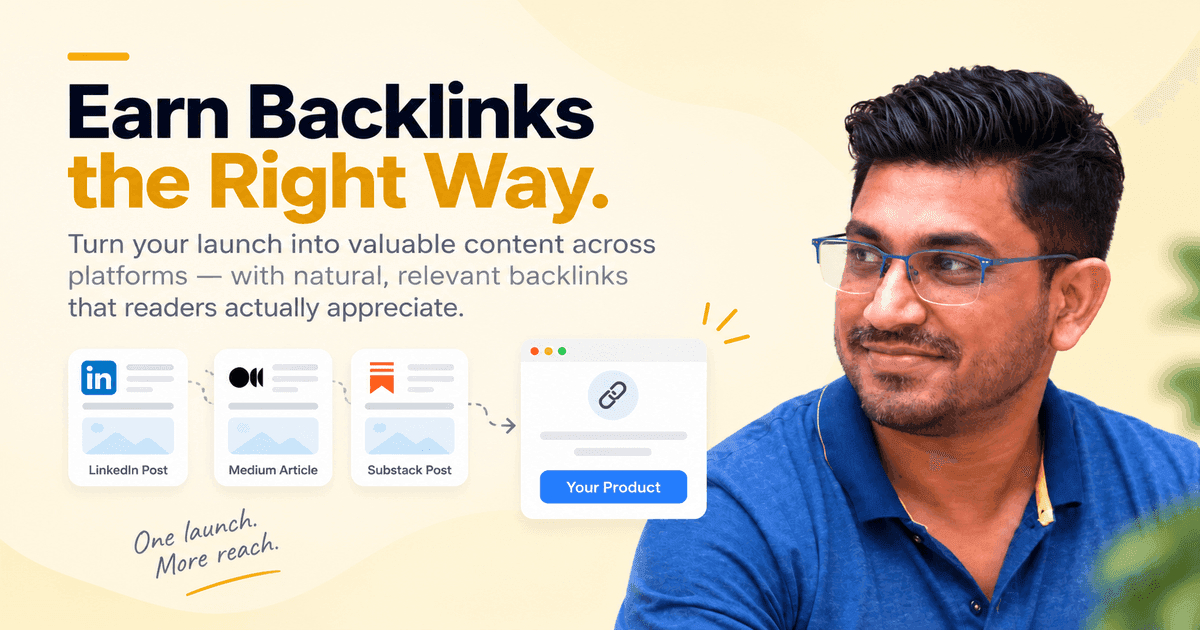
Auto-generated content that links back to your launch only works if it reads like something a person actually wanted to write. Here's how we approach it.
Turning one launch into a Medium article, a Substack post, and a LinkedIn post that all link back to your product is genuinely useful — it's also the kind of feature that's easy to misuse into producing low-effort, keyword-stuffed junk that platforms (and readers) can smell immediately.
The controls that keep it honest
- You set the canonical URL and destination URL explicitly — nothing is auto-guessed.
- Anchor text is yours to write, not auto-generated keyword stuffing.
- UTM parameters are optional and scoped per post, so you can actually see what a backlink drove.
- Every generated post is a full, readable piece of writing first — the link is secondary to the content being worth reading.
If a generated post wouldn't be worth reading without the link in it, we consider that a failure of the generation, not an acceptable trade-off for the backlink.
Frequently asked questions
Will Google penalize me for AI-generated backlinks?
Not if the content around the link is genuinely worth reading and the link is relevant — that's what matters, not whether AI helped write it. What gets penalized is templated, keyword-stuffed text built only to house a link, AI-written or not.
What's the difference between a natural backlink and a spammy one?
A natural backlink sits inside a full, readable piece of content where the link is a secondary, relevant reference. A spammy one is the same generic paragraph pasted everywhere with a link jammed in — readers and search engines both notice the difference.
How do I get backlinks from my own launch content without it looking spammy?
Write (or generate) a genuinely useful version of your update for each platform, set your own anchor text and destination URL instead of letting anything auto-guess them, and make sure the post would still be worth reading with the link removed.
Do UTM parameters in a backlink hurt SEO?
No. UTM parameters are just for your own click tracking — they don't affect the canonical link or its SEO value, so adding them is safe and optional.
Related posts
View all posts
Growth
How to Get Your First 10 Paying Users: A Step-by-Step Playbook for B2B and B2C SaaS Founders
Why the first ten matter more than the next ten thousand - and exactly how to find them.

Product
One post shouldn't mean six rewrites
Why we built Amplibee around adapting content per platform instead of duplicating it, and what 'platform-native' actually means in practice.
Read our features
View all features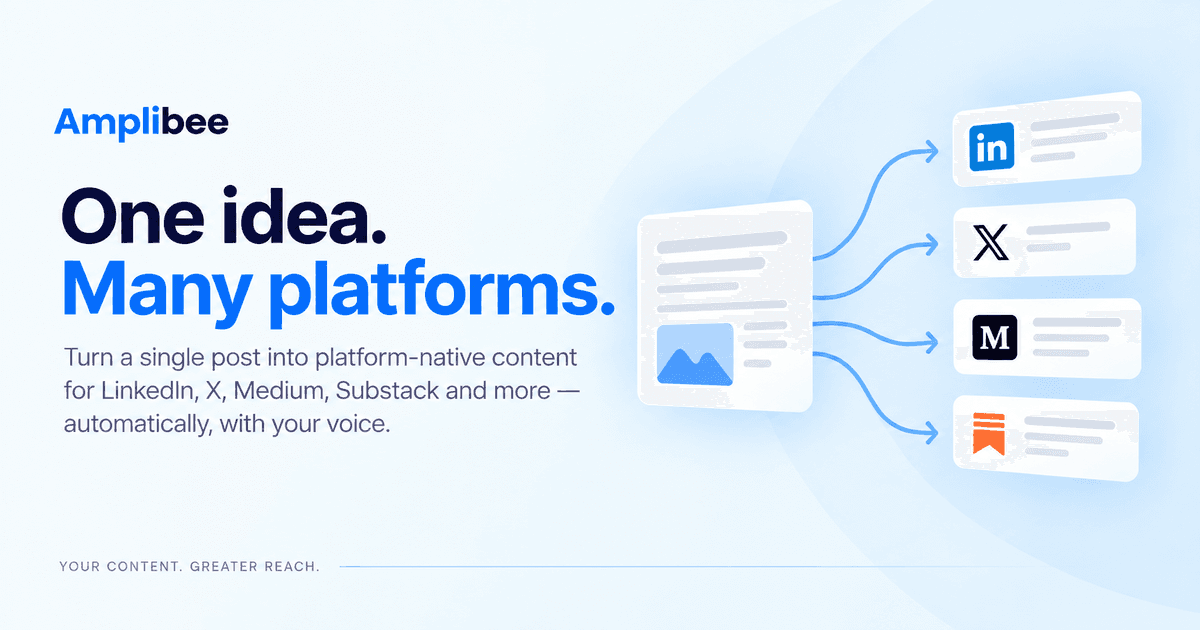
Feature
Content transformation engine
Write once. Amplibee rewrites it into a platform-native version for each destination — a LinkedIn post, a Medium article with headings, or a Substack newsletter — without just copy-pasting the same text.
Feature
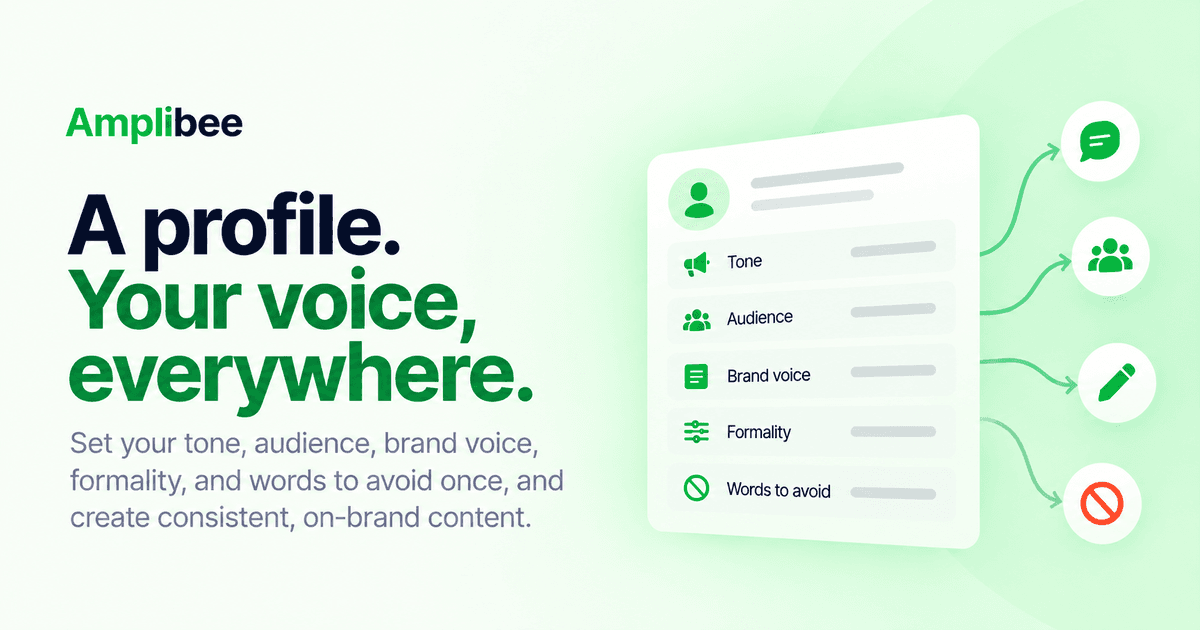
Content profiles
Set your tone, audience, brand voice, formality, and words to avoid once. Save it as a reusable profile so every generated post sounds like you, not a generic AI voice.