
How to Get Genuine GitHub Stars Through Influencer Marketing (Not Bots)
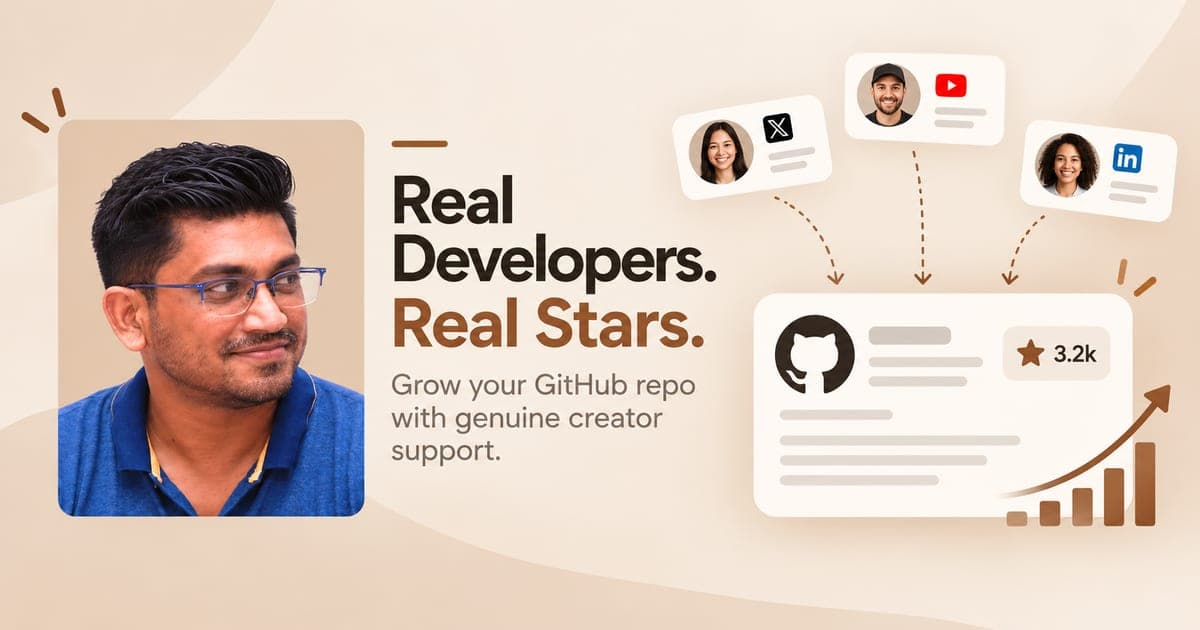
Bought stars get purged and erode trust the moment anyone checks. Here's the real playbook for earning GitHub stars that actually mean something.
The short answer: the fastest reliable way to grow GitHub stars that don't get purged, don't get flagged, and actually correlate with real usage is to get real developers with real audiences to genuinely try your repo and tell their followers about it — not to buy stars from a star-farm service. Amplibee does this by matching your repo with influencers and creators on X, LinkedIn, and YouTube whose audience already cares about the exact problem your project solves.
If you've ever searched "buy GitHub stars" at 1am before a launch, you're not alone — and you're also about to read why that search is the wrong one. This guide covers why bought stars actively hurt you, how GitHub and the wider ecosystem detect them, and a real, repeatable playbook for earning stars that reflect actual interest in what you built.
Why bought GitHub stars don't work anymore (if they ever really did)
A star-farm sells you a number. It does not sell you users, contributors, issues filed by people who hit a real bug, or the kind of organic discovery that gets a repo onto a trending page for the right reasons. The number is the entire product — and numbers without behavior behind them are exactly what gets flagged.
- GitHub actively detects and removes inorganic stars. Accounts created in bulk, with no commit history, no followed repos, and a starring pattern that spikes in a tight time window get caught by abuse detection — sometimes immediately, sometimes months later in a bulk purge. When that happens, your count drops publicly, which reads worse than never having inflated it.
- Developers check. Anyone seriously evaluating a library looks past the star count — recent commits, issue response time, who's starring it (are they real accounts with real projects?), and whether the README reads like it was written by someone who ships. A high star count with a thin commit history and generic-looking stargazers is a red flag experienced developers recognize instantly.
- It doesn't compound. A genuine star from a developer who actually uses your tool often comes with a follow, a mention in their own project's README, a conference talk reference, or a PR down the line. A bought star is a dead end — it never becomes anything else.
- It actively damages trust once discovered. Nothing torches credibility with an open-source audience faster than the community discovering a project bought its numbers. It's the kind of story that gets its own thread, and it follows the maintainer to their next project too.
None of this is about GitHub stars being unimportant — they're a real, useful signal, which is exactly why faking them is such a bad trade. You're spending real money to manufacture a number that becomes a liability instead of an asset.
What actually drives genuine GitHub star growth
Real star growth almost always traces back to a person with an audience trying your project and telling people about it — a maintainer posting a demo, a YouTuber covering a new tool in their niche, a newsletter writer including it in a roundup, a conference speaker mentioning it live. The mechanism is word of mouth, just distributed through people who already have reach.
That's the entire premise behind influencer marketing for open source: instead of hoping the right person organically finds your repo, you brief a campaign, and creators whose audience already cares about your exact category discover it and post about it genuinely — see how the network match works for how that discovery happens.
The developer-audience creators worth reaching
- X/Twitter developers who post build-in-public content — they're already primed to try new tools and share honest reactions with a technically literate audience.
- YouTube channels covering dev tools, frameworks, or your specific stack — a real walkthrough video does more for adoption than almost any other content format, because viewers see the tool actually working.
- LinkedIn voices in your category — especially for developer tools with a business-adjacent angle (DevOps, data infrastructure, internal tooling), where a technical leader's post reaches people with budget and influence over adoption, not just individual contributors.
- Newsletter and roundup writers — inclusion in a well-read weekly roundup is slower than a single viral post, but the traffic is durable and the stars trickle in for weeks.
The playbook: running a genuine GitHub star campaign
1. Get the repo itself ready for a first impression
Before you brief anyone, make sure the thing they'll actually look at earns the star. A clear README with a real problem statement in the first three lines, a working quickstart that doesn't require reading the whole codebase first, and a couple of screenshots or a short GIF if it's visual. Influencers won't manufacture credibility your repo doesn't have — they amplify what's actually there.
Action: Read your own README as if you'd never seen the project. If it takes more than thirty seconds to understand what problem it solves, fix that first.
2. Set up a product profile and brief the campaign
Create a product profile for the repo — what it does, who it's for, what makes it worth a genuine mention, and any facts that should stay consistent (star count, license, notable users). Then brief a campaign with the goal set to GitHub stars. The campaign brief generator drafts suggested talking points per channel from that profile — a thread angle for X, a demo outline for YouTube — as a starting point influencers adapt into their own voice.
Action: Be specific in the brief about the actual problem the repo solves and who feels that problem most acutely — vague briefs produce vague, easy-to-ignore talking points.
3. Let the network match you with the right influencers
A GitHub-stars campaign should reach developer-audience creators specifically, not a broad, undifferentiated influencer list. In the network, influencers list their niches — this is what makes matching work: a campaign for a Rust CLI tool should surface to systems-programming creators, not lifestyle influencers, and a campaign for a no-code integration should surface to a very different set of accounts.
Action: Check who's applying to or matched with your campaign before assuming reach equals fit — a smaller creator whose audience is exactly your target user is worth more than a large one whose audience isn't.
4. Review every deliverable before it counts
When an influencer posts, they submit their deliverable link as proof. Every submission gets reviewed — is it live, does it genuinely engage with the project, does it read like a real developer's take rather than a copy-pasted script. This is the step that keeps a genuine campaign genuine: it's the same discipline that keeps bots and templated spam out of your results.
Action: Actually read what influencers post, not just whether they posted. A short, honest reaction from a relevant developer often drives more real interest than a longer, generic mention.
5. Track what each deliverable actually drove
Every influencer gets a tracked link with UTM parameters, so you can see which specific post, video, or thread drove clicks back to your repo — and correlate that with your actual star growth over the following days. This is the data bought stars can never give you: a real signal about which creators, angles, and channels actually move a technical audience.
Action: After a campaign, look at which influencer's link drove the most qualified traffic (not just clicks) and consider working with them again on your next release.
Manufactured stars vs. genuine influencer-driven stars
| Bought stars | Genuine influencer campaign | |
|---|---|---|
| Risk of removal | High — bulk purges happen without warning | None — stars come from real accounts acting genuinely |
| Correlates with real usage | No | Yes — driven by developers who actually looked at the repo |
| Compounds over time | No — a dead-end number | Often — follows, mentions, contributors, talk references |
| Reputational risk if discovered | Severe — damages trust in the maintainer | None — it's how open source has always grown |
| Attribution and learning | None | Per-influencer tracked links show what actually worked |
A star count is supposed to be a proxy for real interest. The moment you fake the proxy, you've thrown away the only reason it was ever worth having.
What good looks like: a realistic campaign shape
A well-run GitHub-stars campaign for a mid-sized open-source project typically involves a handful of relevant creators rather than dozens of generic ones. One or two X developers posting an honest first-impressions thread, a YouTube walkthrough from a channel already covering your category, and a mention in a relevant newsletter roundup can meaningfully move a repo's visibility — and every star that follows is tied to someone who actually looked at what you built.
This is slower than a star-farm's overnight number, and that's the point — it's the same reason a launch built on genuine influencer marketing for a SaaS product outperforms one built on bought engagement over any timeframe longer than a week. For more on why the bought version collapses under scrutiny, see why fake engagement kills your launch and what to do instead.
Get the next post
Tactics like this one, sent when we publish — no spam, unsubscribe anytime.
Frequently asked questions
Can you buy GitHub stars safely?
Not reliably. GitHub's abuse detection identifies inorganic starring patterns — bulk-created accounts, tight time windows, no real activity — and removes them, sometimes in delayed bulk purges that make your count drop publicly. There's no safe version of manufacturing a number GitHub is actively built to detect.
Does GitHub remove fake or bought stars?
Yes. GitHub's platform-abuse systems flag and remove stars from accounts that show inorganic patterns, and purges can happen well after the stars were added — which is often worse for a maintainer than never having them, since the drop is visible.
What's the fastest genuine way to grow GitHub stars?
Get real developers with relevant audiences to actually try your project and share their honest reaction — through a demo video, a build-in-public thread, or a newsletter mention. Influencer marketing matched by developer niche is how this happens reliably instead of by chance.
How is influencer marketing for GitHub repos different from buying stars?
Buying stars manufactures a number with no one behind it. Influencer marketing gets a real person with a real, relevant audience to genuinely try your project and tell people about it in their own words — the resulting stars reflect actual interest and often bring follow-on engagement like contributors or mentions.
Do I need a huge budget to run a GitHub star campaign?
No — Amplibee's Starter plan lets you list a product profile and run one active campaign for free, and campaigns can run on a product-only or revenue-share basis, not just paid sponsorship, depending on what you can offer influencers.
Will influencers post generic ads for my repo?
No — the AI-generated brief is a starting point of talking points and angles, not a script. Genuine influencers adapt it into their own voice and post their own honest take, which is what makes the resulting engagement mean something to their audience.
Related posts
View all posts
Product
How to Run an Influencer Marketing Campaign for Your SaaS Launch
A practical, step-by-step guide to briefing a campaign, matching with real influencers, reviewing deliverables, and tracking results on Amplibee.
Growth
How One B2B SaaS Founder Used Genuine Influencer Marketing to Reach 10 Paying Customers Organically
No customer database, no audience, and every personal contact already asked. How one founder used niche creators on Amplibee to go from 2 to 10 paying customers — with no ads and no bought engagement.
Read our features
View all features
Feature
Product profile
Save your product's voice, audience, and key facts once. Every campaign brief you generate afterward reuses it, instead of you re-explaining what you're promoting each time.
Feature
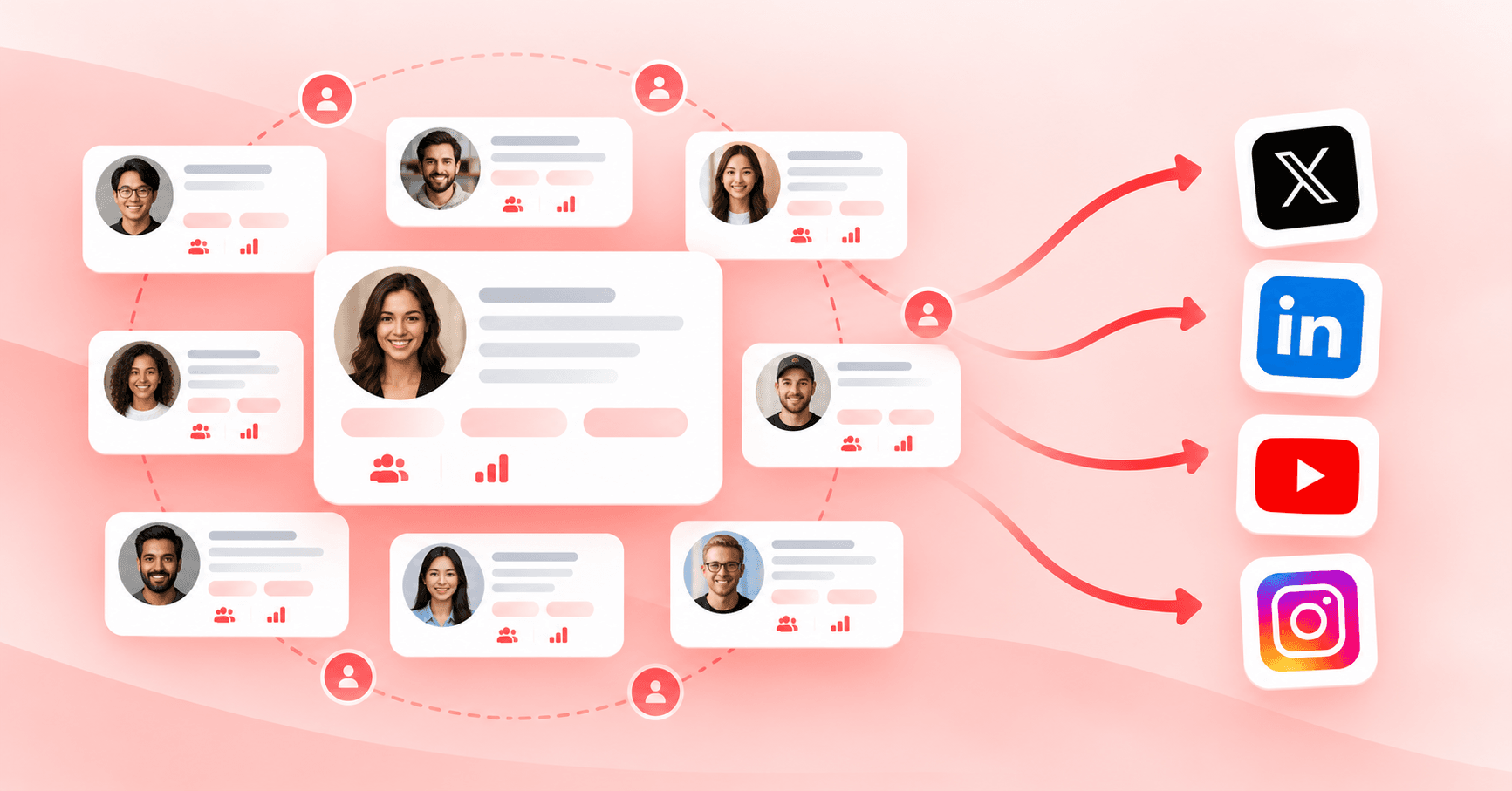
Influencer network
Browse real influencers and creators on X, LinkedIn, YouTube, and Instagram by niche and audience size. Every profile is opted in and posts to their own genuine audience.