 Amplibee

What is NativeShip?
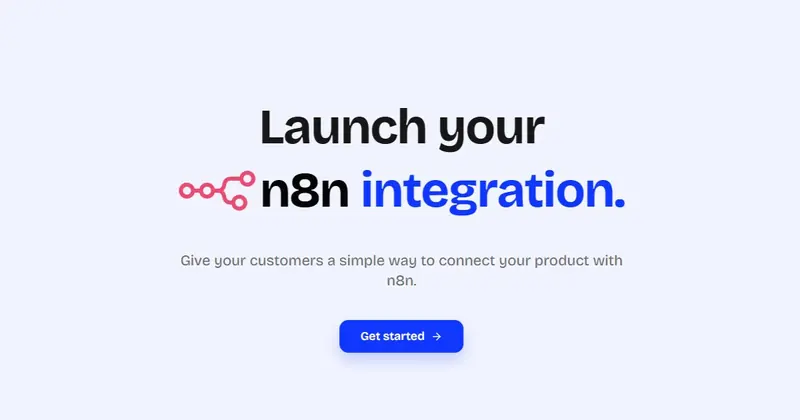
NativeShip is a service that generates, publishes and maintains an official n8n integration for your SaaS product.
n8n is a workflow automation tool. When a product has its own n8n node, its customers can use it as a trigger or an action next to Slack, Google Sheets, Gmail and thousands of other apps. NativeShip does the integration work so your team does not have to build and maintain the node by hand.
Your customers never need to know NativeShip exists. They see your product as an n8n node.
Who is NativeShip for?
It is built for SaaS companies that want to offer an n8n integration without taking on the full work of building and maintaining one.
It fits teams whose customers already ask questions like “Do you support n8n?”, “Can I connect this to n8n?” or “Is your API available as an n8n node?”.
How does NativeShip work?
You upload an OpenAPI 3 specification, shape how the node looks, and publish it to npm from your own GitHub repository.
- Import your API: upload the file, paste the document or point NativeShip at its URL. The operations, parameters and authentication in the spec become the node. No SDK, sample code or source access is needed.
- Shape the node: rename resources, reorder operations, hide what users do not need and write every label, with a live preview of how the node looks inside n8n.
- Generate the package: a build job reads your spec, compiles the node package and validates it against n8n’s community node guidelines.
- Publish from your own GitHub: connect GitHub and npm once. After that each release takes one click, and you review the exact package and version before anything goes out.
- Keep a record: every version links to its npm package, Git tag and workflow run, so you always know what shipped and when.
What does the generated n8n node include?
A complete, publish-ready npm package that follows n8n’s official community node guidelines.
You can publish under your own npm account with npm publish, keep the package private, or push it to GitHub first.
- The required package structure, with node and credential files and the n8n-nodes- package prefix
- package.json, the compiled node and credential files, and the metadata n8n reads
- Resources and operations taken from your API, with labels you control
- GitHub integration for releases and version history
How much does NativeShip cost?
NativeShip is a one-time payment, not a subscription. At the time of writing it is listed at $199 for one n8n node, with three build jobs included.
There is no recurring charge, no seats and nothing to cancel later. Importing or re-importing your OpenAPI document does not use a build job, so you can get the spec right before you spend one. Check nativeship.io/pricing for the current price.
Why launch an n8n integration at all?
An official node puts your product inside workflows your customers build themselves, which makes it easier to adopt and harder to replace.
You do not have to build every workflow your customers need. You give them the building blocks, and they combine your product with the other tools they already use.
Alternatives to NativeShip
There are three common ways to get a SaaS product into n8n. They differ in how much you build and maintain yourself.
- Build the node by handStart from n8n’s official starter template and write the node, credentials and packaging yourself.github.com/n8n-io/n8n-nodes-starter ↗
- n8n-openapi-node (open-source library)An MIT-licensed library that turns an OpenAPI v3 spec into node properties.github.com/devlikeapro/n8n-openapi-node ↗
- The HTTP Request noden8n’s built-in node that calls any API. Your customers set it up themselves.docs.n8n.io/integrations/builtin/core-nodes/n8n-nodes-base.httprequest ↗
How NativeShip compares
| Option | Best for | Trade-off |
|---|---|---|
| NativeShip | Teams that have an OpenAPI 3 spec and want a published node without building the package themselves | Needs an OpenAPI spec, and it is a paid, one-time purchase |
| Build the node by hand | Teams that want full control over every field and behaviour | The most engineering time, and you keep the node in sync with your API yourself |
| n8n-openapi-node (open-source library) | Developers comfortable wiring up and publishing an npm package themselves | You still create and publish the n8n-nodes package, define credentials by hand, and only first-level request body fields are generated |
| The HTTP Request node | One-off workflows where no official node exists | Customers must read your API docs and wire each call. Your product does not appear as a node they can search for |
NativeShip sits between building by hand and leaving customers on the HTTP Request node: you keep an official, searchable node without writing and packaging it yourself. If you need unusual behaviour that an OpenAPI spec cannot describe, a hand-built node gives you more control.
Questions people ask about NativeShip
What is NativeShip?
NativeShip helps SaaS companies launch and maintain integrations for n8n, so their customers can use their product in n8n workflows.
Who is NativeShip for?
SaaS companies that want to offer an n8n integration without taking on all the work of building and maintaining one themselves.
Do I need to build the n8n integration myself?
No. NativeShip handles the integration work, so your team does not have to build everything from scratch.
What do I need to create an n8n node with NativeShip?
An OpenAPI 3 specification of your API. Upload the file, paste the document or point NativeShip at its URL. No SDK, sample code or access to your source is needed.
Can NativeShip work with my existing API?
Yes. NativeShip uses your existing API, as described in your OpenAPI specification, to create the n8n integration.
What is an n8n community node?
An npm package that adds your product to n8n as a first-class node, so people can drag it onto a workflow instead of using a generic HTTP Request node.
Does NativeShip follow n8n’s guidelines?
Yes. Generated packages follow n8n’s official community node guidelines, including the package structure, file layout, naming and the n8n-nodes- prefix.
Can I publish the node to npm?
Yes. You get a publish-ready npm package. Publish it under your own npm account, keep it private, or push it to GitHub first. NativeShip can also publish releases from your own GitHub repository.
Will the integration stay up to date when my product changes?
NativeShip is designed to keep your integration aligned with changes to your product and API. Re-import your spec and publish a new version when your API changes.
Do my customers need to know NativeShip?
No. NativeShip works behind the scenes. Your customers use your product as an n8n integration.
Is NativeShip a subscription?
No. It is a one-time payment, listed at $199 at the time of writing, with no recurring charge.
What are the alternatives to NativeShip?
You can build the n8n node by hand from n8n’s official starter template, use the open-source n8n-openapi-node library to generate node properties from an OpenAPI spec and publish the package yourself, or leave customers to call your API with n8n’s built-in HTTP Request node.
How does NativeShip compare with building an n8n node by hand?
NativeShip generates and validates the package from your OpenAPI 3 spec and can publish releases from your GitHub, so you write less code and maintain less. A hand-built node gives more control over unusual behaviour that a spec cannot describe.
What is a build job?
One full generation run: NativeShip reads your specification, compiles the node package and validates the result. Importing your OpenAPI document does not use one.